PACKLINE is dynamic, backpacker-first app that streamlines packing by making every ounce visible, every gear swap seamless - trip after trip.
App | Personal Use
Tools
Adobe Illustrator Figma
Adobe Photoshop
Project
Personal, for The Girls™
Timeline
4 weeks
Tools
Adobe Illustrator
Adobe Photoshop
Figma
Problem
Backpackers need a simpler, mobile-friendly way to plan and balance their gear for both solo and group trips. Currently, most backpackers rely on a patchwork of tools — spreadsheets, Lighterpack app, various notes apps, and mental math. This fragmented system fails to support real-time group collaboration, consumables tracking, or post-trip reflection. It creates a disconnect between the plan and the trail, a friction in planning, unclear load sharing, and missed opportunities to improve future trips.
The challenge is to create a mobile-first system that transforms packing from a static checklist into a collaborative, dynamic system
Solution
Design a mobile-first backpacking app that reimagines gear management as a dynamic, collaborative system. By surfacing a live, responsive "weight engine" and shared inventory visibility, a static checklist is reframed as a transparent, collective effort. Post-trip reflection tools turn gear choices into a learning loop, ensuring every ounce is justified and every decision is data-backed.
Packing is transformed from a fragmented chore into a clear and collaborative pre-trip ritual, empowering hikers to pack lighter and improve with every mile spent outside.
Role
As the Lead Designer, I owned the end-to-end design of Packline, transforming shared backpacking pain points into a functional solution. Treating my outdoor circle as the primary audience, I facilitated collaborative discovery sessions and later-stage usability testing, translating their insights into clear product design decisions. Built for backpackers, by a backpacker, the experience was shaped through iterative feedback to ensure the app could meet real-life trail needs.
Process
0102030405Background & Research

01
User Interviews
About 63 million Americans went hiking in 2024, making it the most popular outdoor activity measured by the Outdoor Industry Association* and the trails are getting more crowded every year. The National Park Service** reported a record-breaking 331.9 million recreation visits in 2024, surpassing the previous all-time high set in 2016. As more people venture beyond the trailhead and into the backcountry overnight, managing what goes in the pack and how much it weighs is as critical as planning the route itself. Yet despite this surge in popularity, no modern mobile tool exists to help backpackers track, optimize, or coordinate their gear load.
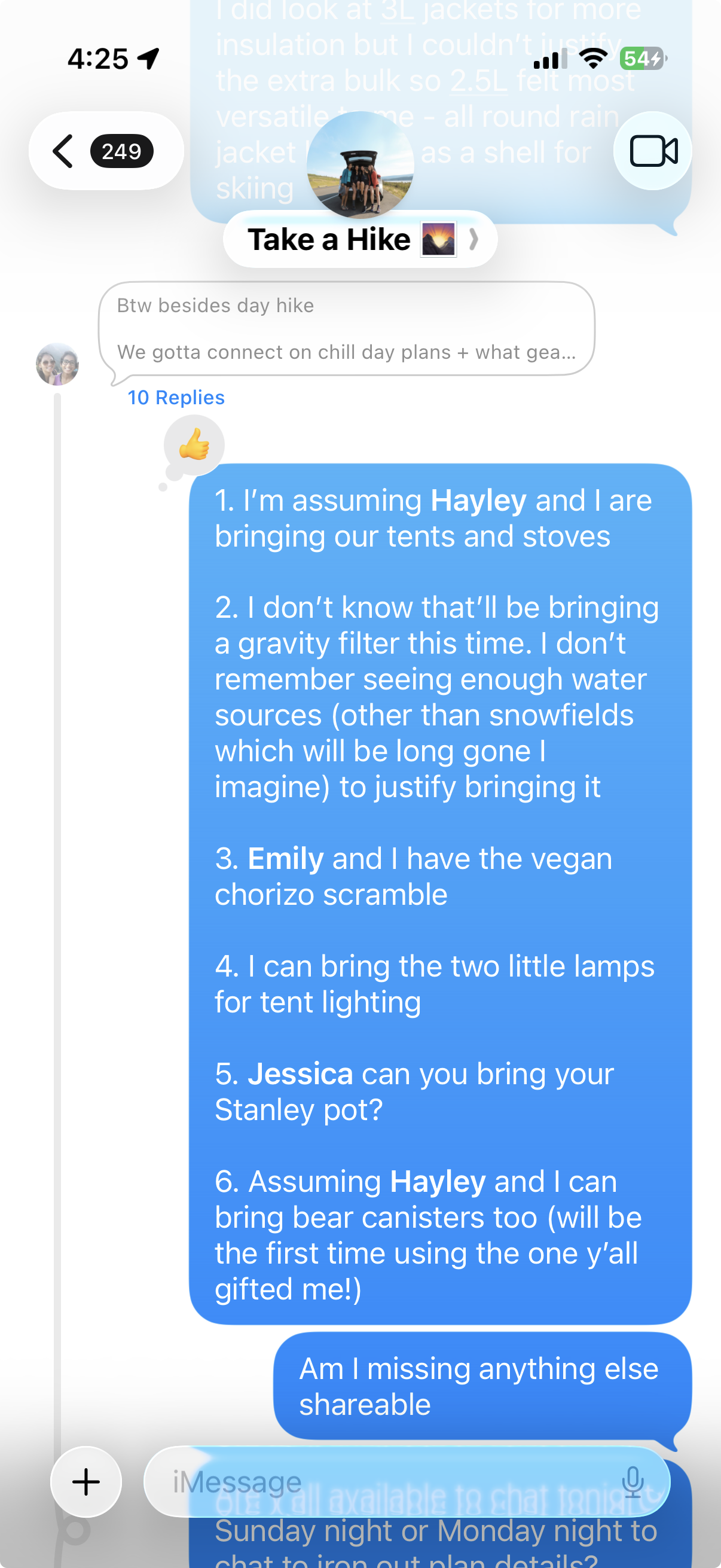
This project is also deeply personal. It was born out of a frustration I've watched play out repeatedly within my own backpacking circle. Every group trip begins the same way: a flurry of texts discussing who should carry the bear canister, who's got room for the shelter, and whether Emily's pack is already too heavy to take the stove. We're redistributing weight on the fly with no visibility into what each person is actually carrying. That kind of chaotic gear swapping - shuffling the tent fly to one person, the poles to another is something every experienced backpacker knows all too well, and it's precisely the problem I set out to solve.
KEY INSIGHTSBACKGROUNDCURRENT PROCESSFEATURE ROADMAPUSER INTERVIEWSCOMPETITIVE ANALYSIS*Outdoor Industry Association. (2025). 2025 outdoor participation trends report. https://outdoorindustry.org/2024-outdoor-participation-trends-report/
**National Park Service. (2025). Visitation numbers. U.S. Department of the Interior. https://www.nps.gov/aboutus/visitation-numbers.htm
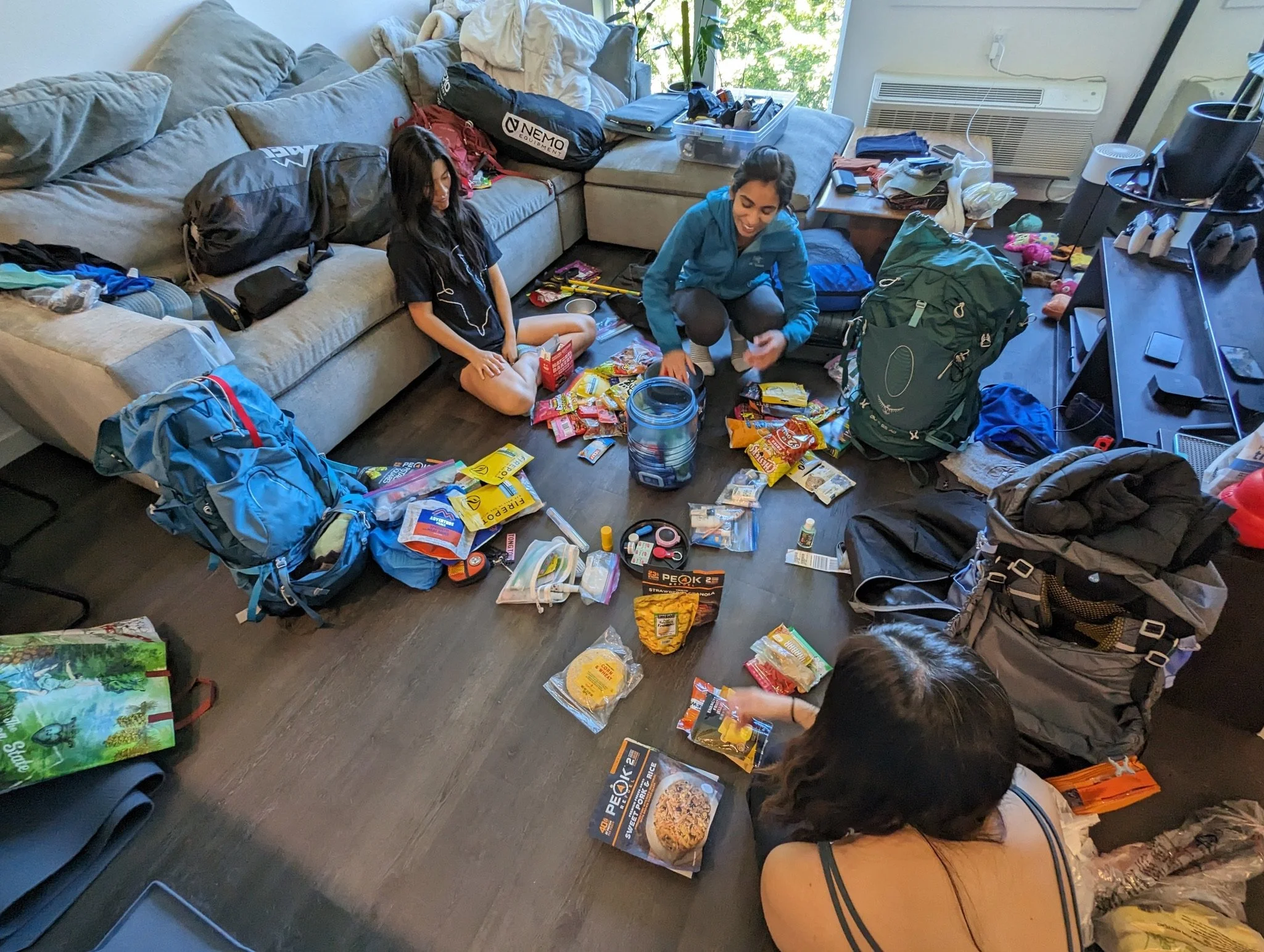
Every backpacking trip starts with sitting on the floor and reconsidering your life choices.
Before building a single screen, I brought the problem directly to the people I hike with. I needed to understand backpackers’ current pre-trip packing process, the tools they rely on, and what they felt they lacked and could improve. So, I shared a brief description of PackLine's concept in our group chat and asked a set of questions. I wanted to:
Understand who the backpacker is and what their relationship to pack weight is
Identify friction points when building a list and packing gear
Identify features that would deliver the most value across beginner, intermediate, and experienced user groups
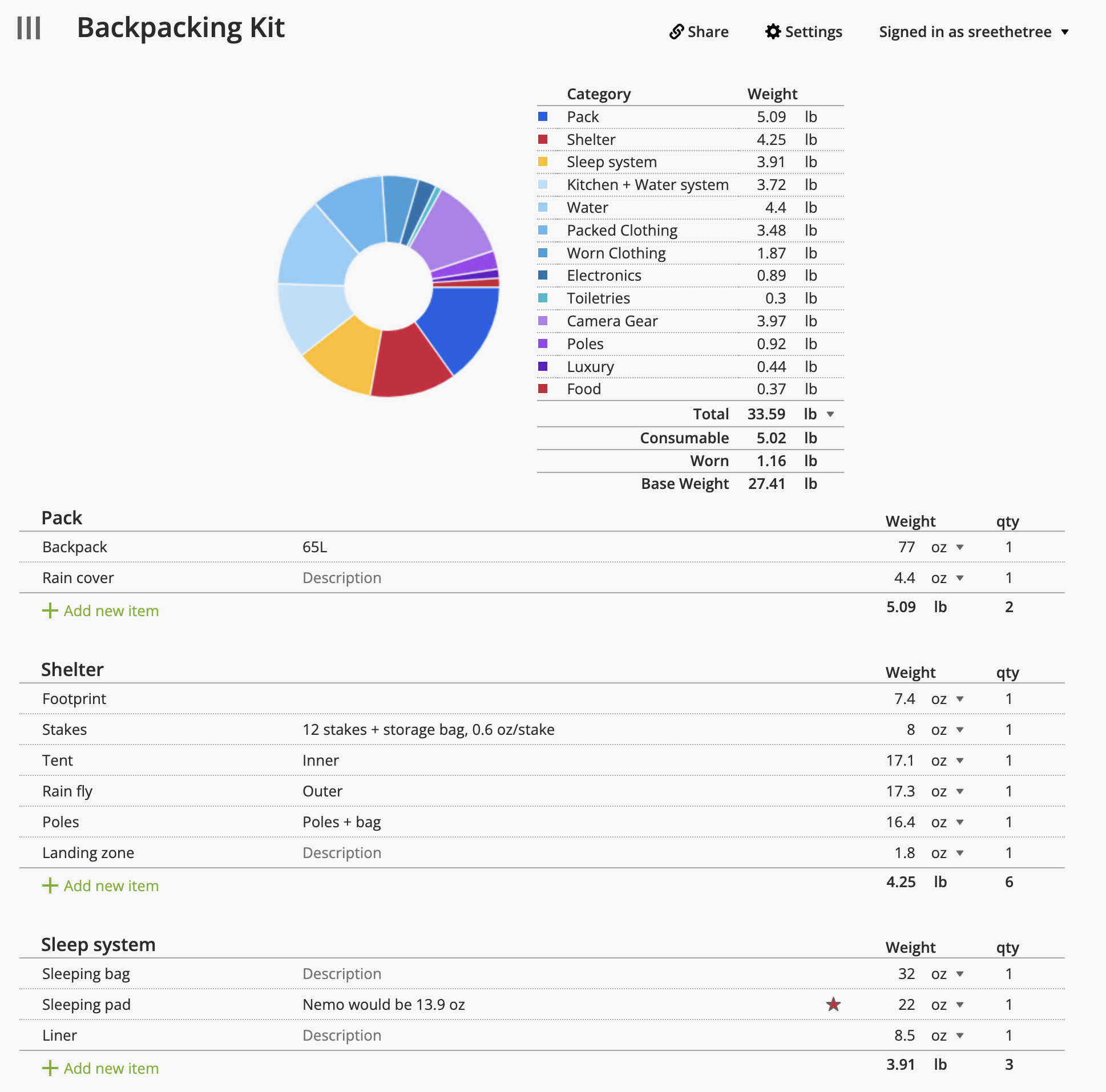
Examining the current landscape of existing tools like LighterPack, spreadsheets, and AllTrails handle (or don't handle) gear tracking and list making
The responses came from three participants: Emily, Jessica, and Hayley, all of whom are active outdoorswomen and fellow backpackers. The key quotes and takeaways are notated below:
-
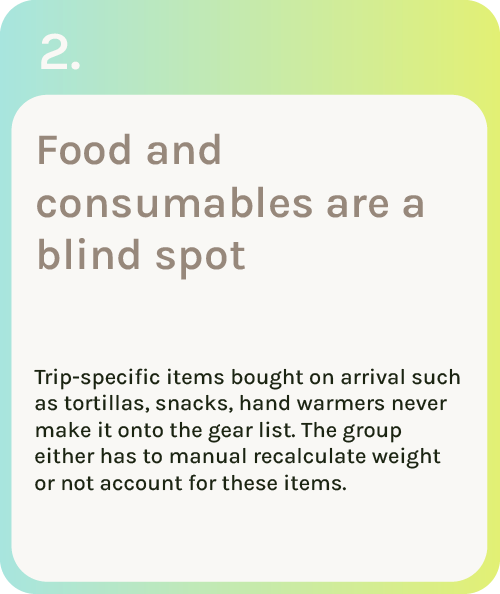
Emily: We refer to our global gear list when shopping, but it needs to be manually reset per trip. We always have to recalculate food and we never really know the weight of it.
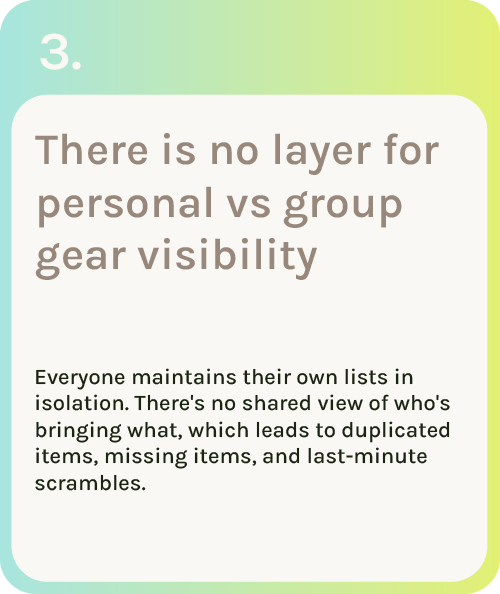
Jessica: I just have a general trip packing list in Apple Notes. There's no layer for personal vs group items. I'd love to toggle between what I need to pack vs what we need as a group.
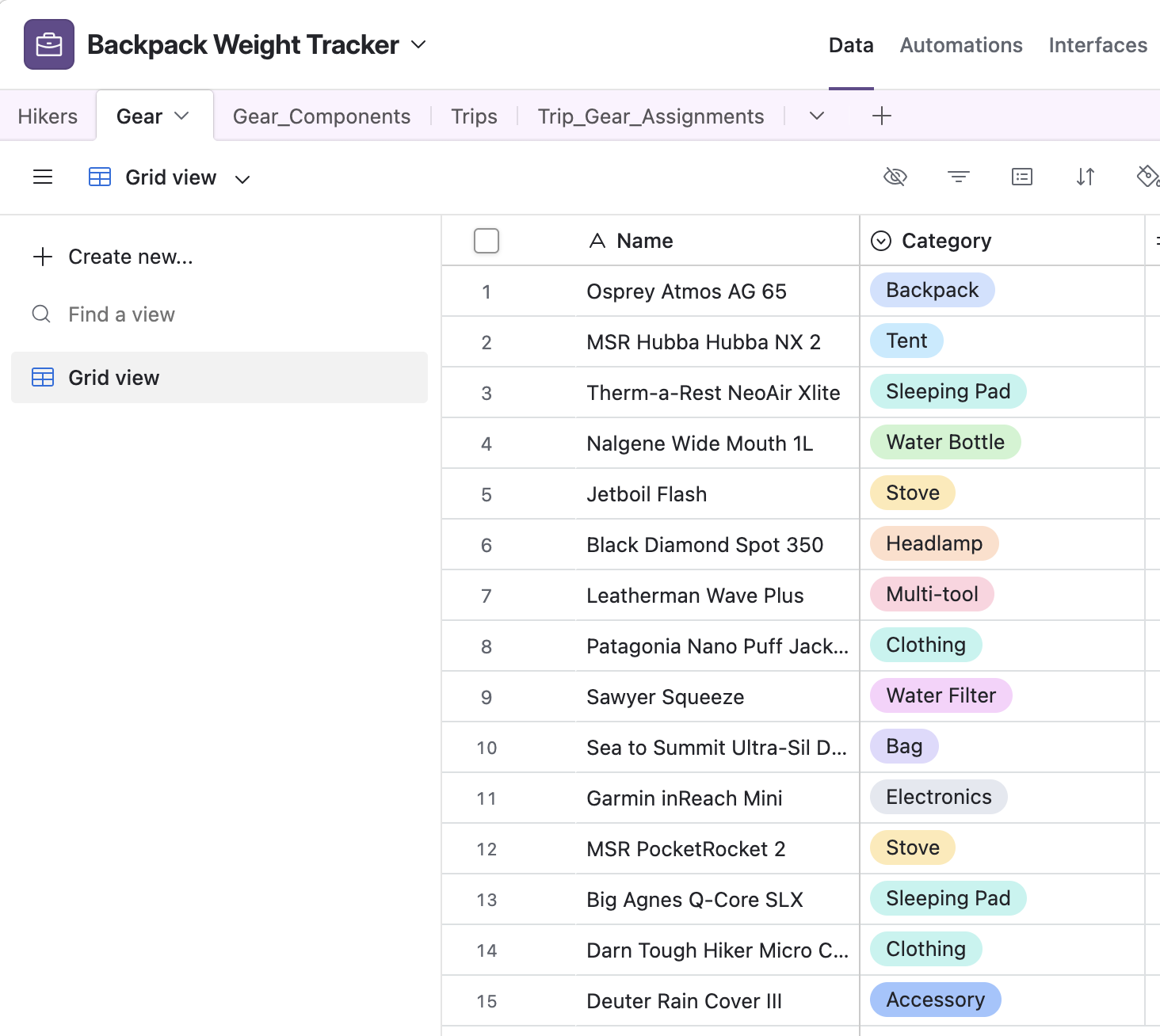
Hayley: Our current google docs gear list is actually great and I refer to it often when shopping, but it doesn't work at the trip level and has no weight insight.
-
Emily: Food weight is the thing that always surprises us — especially trip-specific weight like hand warmers or cooling towels that we don't always need. We manually recalculate every time.
Jessica: Being able to see who's bringing what so we can cut out duplicates, for example toothpaste, would be really useful. That layer of visibility just doesn't exist right now. -
Hayley: Not bail exactly, but I've definitely suffered through nights because I brought the wrong sleeping bag. I didn't realize my summer bag wasn't rated for how cold it got at elevation.
Emily: We once had two people bring two full bear sprays for a group of four because no one checked. Just redundant weight nobody needed to carry.
-
Hayley: If it told me something useful I didn't already know like "your pack is 28% of your body weight, that's in the yellow zone." A number with context is way more actionable than just a raw weight.
Jessica: I think mobile-friendliness is compelling but I feel like there's probably opportunities in emphasizing other value props. -
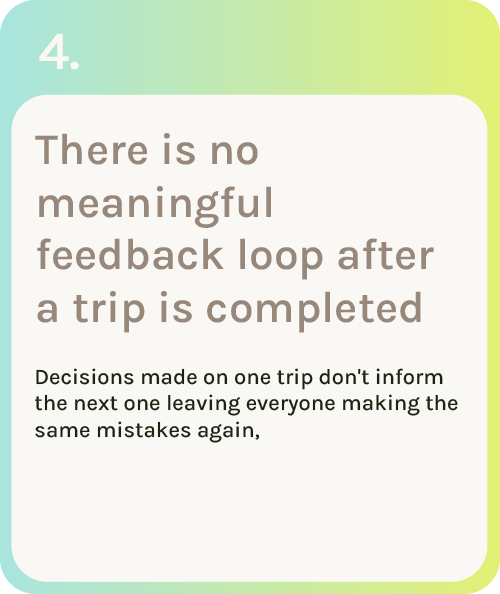
Emily: We have been keeping a log of our traumas, surprising sucesses, and learnings on an 8-year old Apple note.
A post-trip feedback feature would be good though— like how much water was left, how many snacks uneaten, how hot the trip was, bug count.Hayley: It'd be cool to look back at what you actually ended up packing for each trip and see the stats like a donut chart, weight, etc. and maybe even add your own photos for reference.
Coordinating gear across a group means bouncing between 5+ tools and a lot of assumed context
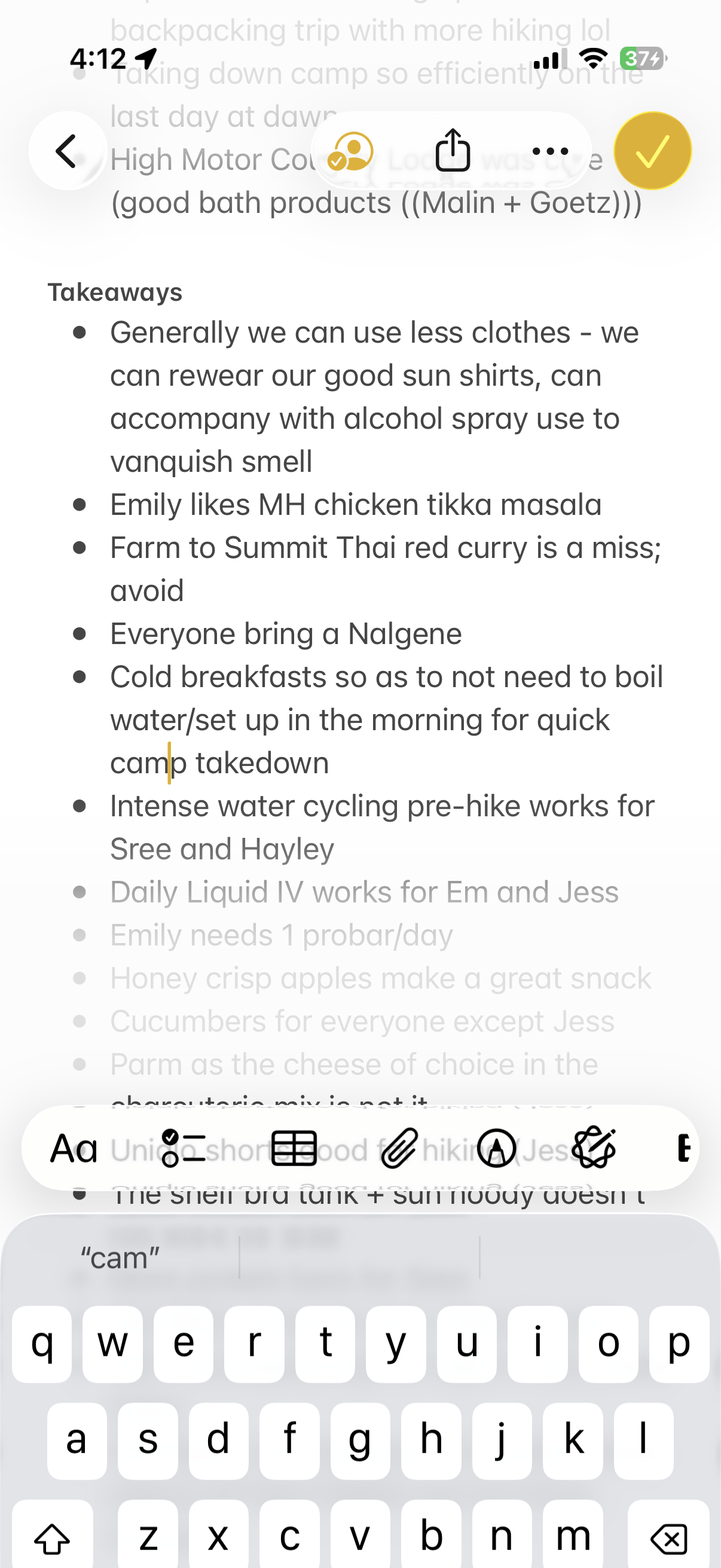
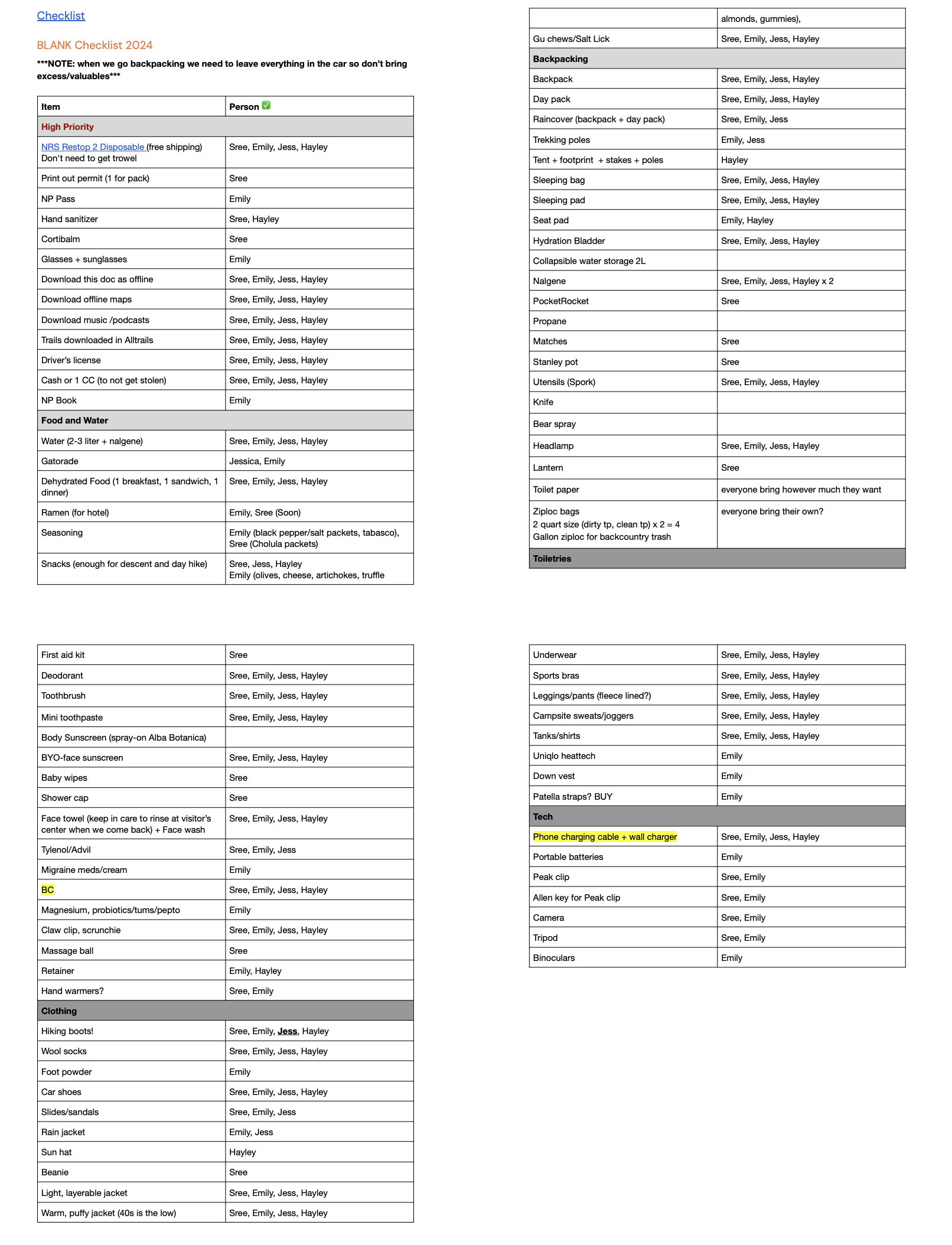
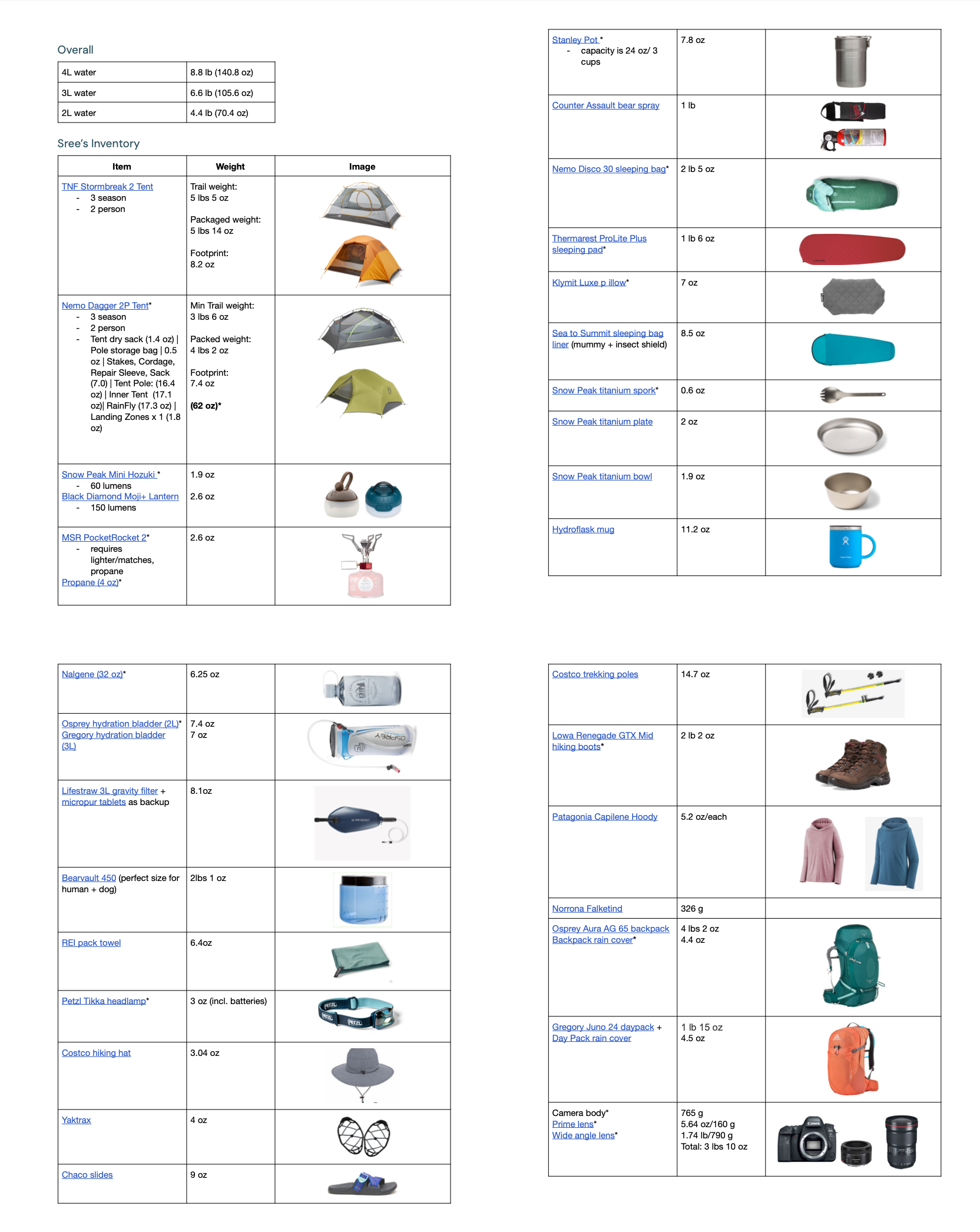
Current Process
Key Insights
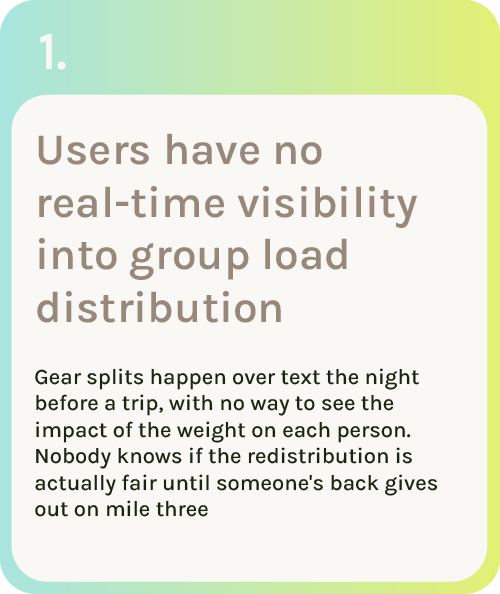
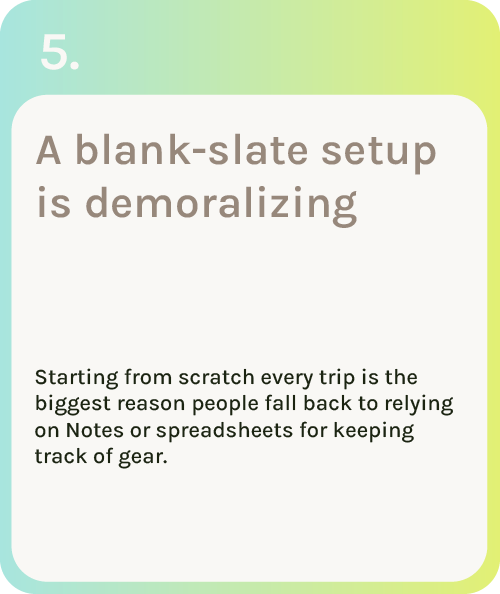
Across user interviews and candid conversations with the people I actually hike with, the same friction points kept surfacing in different forms. I distilled them into five key insights, with each one pointing to how backpackers currently plan, coordinate, and reflect on their trips. Each insight became a guiding compass for possible features.
Competitive Analysis
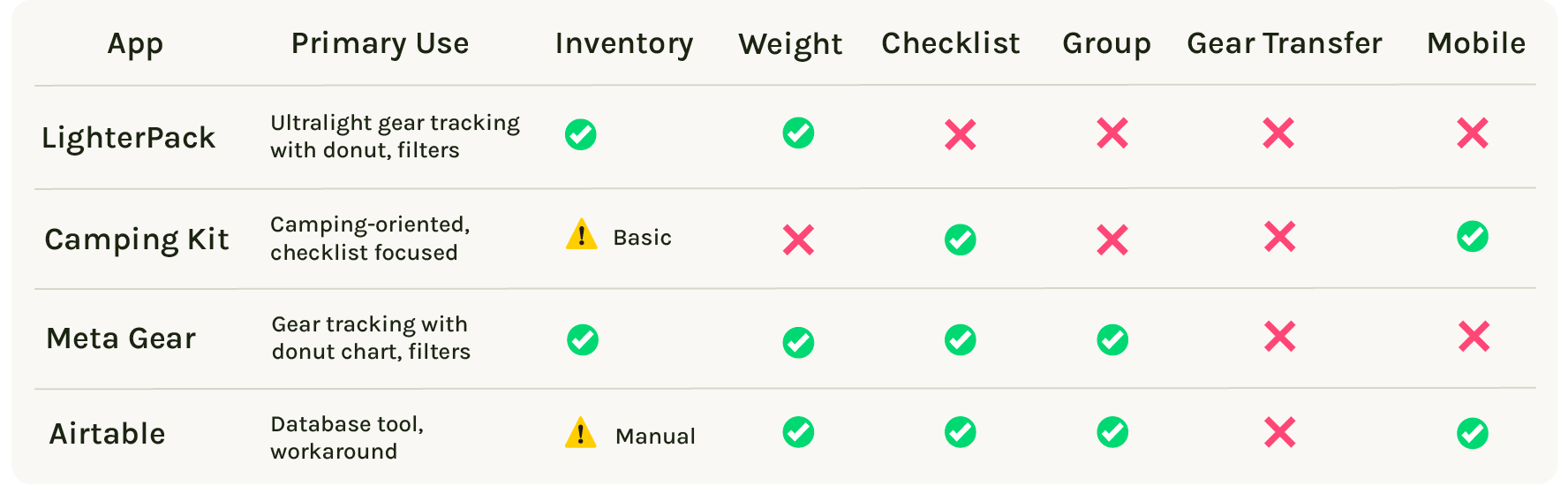
Translating needs into features
Research and user interviews surfaced a clear feature set. I mapped each one back to a specific insight, then split them into two buckets: V1 for features that would deliver the core PackLine experience within my self-imposed timeline, and V2 for ideas that emerged from research but required more time to execute well. I created a feature roadmap to keep me honest about scope without losing sight of the vision.
02
USER FLOWS & WIREFRAMES
USER FLOWSSKETCHESWIREFRAMES
03
Prototype

04
Feedback & Iteration